
European Commission Fines X €120M. Let’s not Confuse Freedom of Speech with lack of Transparency
Last week, the European Commission issued a €120 million fine to X for breaching its transparency obligations under the Digital Services Act (DSA). The violations include the deceptive design of its “blue checkmark,” the lack of transparency in its advertising repository, and the failure to provide access to public data for researchers.
Backed by the US administration, Elon Musk claims that the European Commission is restricting freedom of speech. But seriously — since when is a call for basic transparency an “assault” on freedom of speech?
Let’s recap the reasons behind the fine, one by one. And let’s take a closer look at what Musk’s interpretation of freedom of speech really means.
1 — Deceptive design of X’s “blue checkmark”
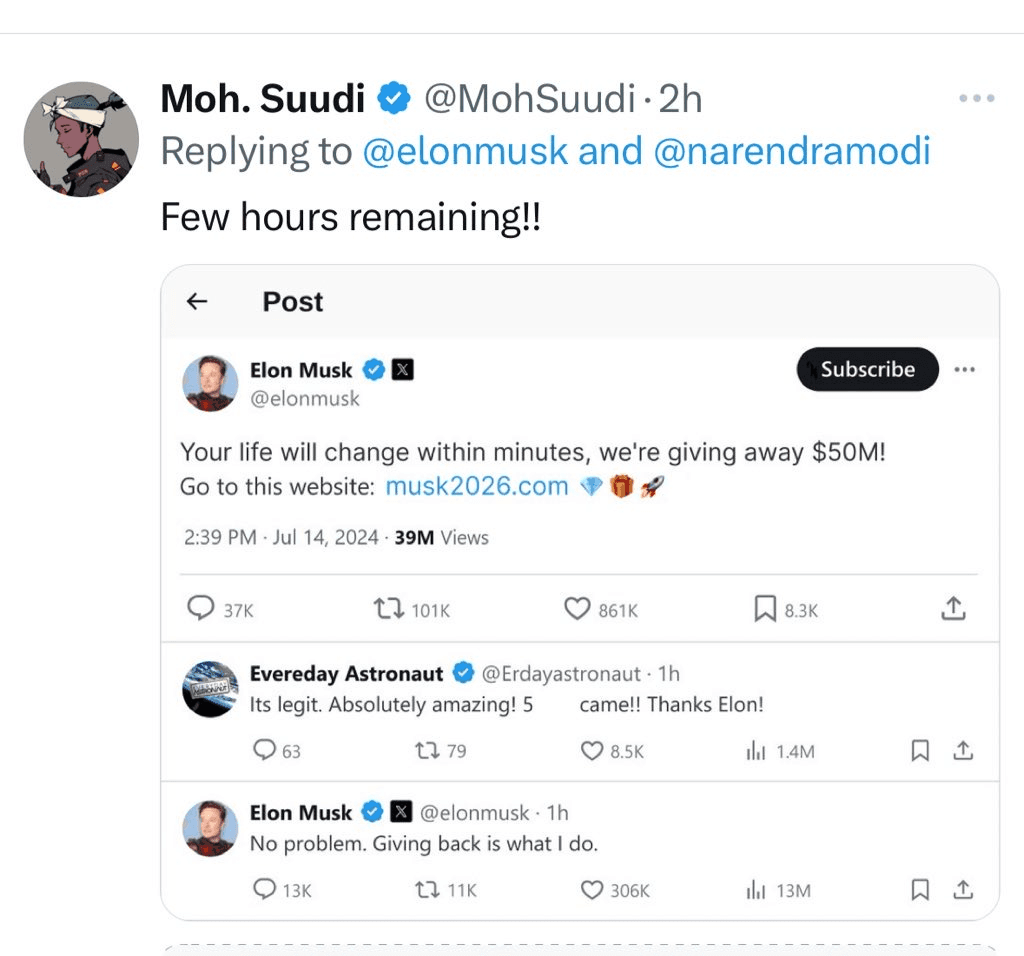
The Commission objects to X’s use of the blue checkmark for “verified” accounts because it misleads users. On X, anyone can pay for a “verified” status, but the company does not meaningfully verify who is actually behind the account. This opens the door to scams, impersonation fraud, and other manipulative practices by malicious actors.
To add: The DSA does not require platforms to verify users — but it does prohibit claiming that users are verified when no actual verification took place. This is very well described on Kaspersky’s blog.
In short, Elon Musk’s take on freedom of speech seems to be this: Why invest in proper verification when you can simply charge people to look verified?
2 — Lack of transparency in X’s advertising repository
X’s advertising repository fails to meet the transparency and accessibility requirements of the DSA. If ads even appear - they appear with delays, and the repository lacks essential information such as the content and topic of the ad, as well as the legal entity paying for it. Moreover, the ads library offers no API — a clear violation of Article 39 of the DSA.
This opacity is a gift to fraudsters. Meanwhile, it puts legitimate advertisers at a disadvantage.
The ads library itself is an insult to anyone attempting to investigate fraud or identify the source of an advertisement — forcing users to wait five minutes for a single query, effectively rendering the entire system useless.
Let’s further summarise Elon Musk’s take on freedom of speech: A vigorous defence of scammers’ right to stay hidden. Profits from fraudulent ads count, too — no tax, no accountability, no liability for the damage caused.
3 — Failure to provide researchers with access to public data
X also fails to meet its obligation to provide researchers with access to public platform data. For example, X’s own terms of service prohibit qualified researchers from independently accessing public data — including via scraping — even when such access is necessary to study systemic risks.
To even reach the form for accessing any public API or research tools, X requires users to make a standard payment — yet another violation of the DSA, which explicitly mandates that vetted researchers must not be charged for such access.
Musk’s stance on free speech seems clear enough: Freedom of speech is fine — but freedom of research? Absolutely not.

Conclusion:
The fine imposed on X confirms that the DSA is not just a theoretical rulebook; the European Commission is fully prepared to enforce it. Musk may brandish “freedom of speech” as a shield, but in reality he is defending little more than his refusal to take responsibility for the risks his own business model creates.
Calling for transparency does not restrict freedom of speech. We should not confuse the right to speak freely with the supposed “right” to scam people or operate without accountability. And if Musk is truly concerned about free expression, he might consider championing it in Russia as well — where X remains conveniently blocked.
TikTok, at least, adopted a slightly more conciliatory tone last week. We now await Google and Meta’s turn in the spotlight.
Sources:
https://ec.europa.eu/commission/presscorner/detail/en/ip_25_2934
https://www.kaspersky.com/blog/beware-of-twitter-blue-fake-accounts/49199/
Latest blog posts
View All July 20, 2026
TikTok's ad library, seven months into its DSA pledge: two fixes shipped, two still missing
The European Commission accepted TikTok's binding Digital Services Act commitments on ad transparency in December 2025. We tested the live Commercial Content Library in July 2026: full ad content and 24-hour updates are live, but the promised age-and-gender reach data and search filters are not.
 July 13, 2026
X’s ad repository still breaks DSA Article 39, seven months after the €120M fine
The European Commission fined X €120 million over its DSA ad repository in December 2025. We tested the live repository in July 2026: it still is not searchable, still lacks the data Article 39 requires, and is now slower than when it was fined.
 July 12, 2026
Why this transparency data only exists in the EU
The monthly-active-user counts, ad libraries and transparency reports behind this site all exist for one reason: the EU's Digital Services Act forces very large platforms to publish them. Here are the specific articles that make it possible — and why the same numbers don't exist anywhere else.