
About The Project
The World Needs Zero Fraud On Social
Our mission is to identify, analyze, and eliminate fraud on social media that misleads users, manipulates public opinion, and violates transparency standards.
Social media is where billions of people now get their news, their entertainment, and a growing share of their sense of what is true. That makes it the most powerful mass medium ever built. It is also the easiest one to manipulate.
Most of what you see in your feed comes from strangers: influencers, advertisers, publishers, accounts you know nothing about. What gets shown to you is decided by recommendation systems nobody outside the platform can inspect, tuned to maximise attention and ad revenue.
That system can be gamed, and it is. Networks of fake accounts and bought engagement make fringe content look popular. An advertiser can aim a message at a small, precisely chosen group of people, and nobody else will ever see it. No earlier medium worked this way. A newspaper ad or a TV spot ran in front of everyone, including its critics.
Fraudsters understood this years ago. They run deceptive ads, keep them under the radar, and move on before anyone reacts. Most people scrolling past have no idea how much of what they see is engineered.
We do not think the answer is to give up on these platforms. The answer is to make them show their work. That is what SocialMediaTransparency.org exists to do.
What this site is for
SocialMediaTransparency.org is a public record of how the major platforms behave under the EU’s Digital Services Act — and of the fraud that still slips through. In practice that has meant getting hundreds of fraudulent ads taken down, flagging coordinated networks, publishing the numbers platforms would rather leave in a PDF, and putting the findings in front of the people who can act on them.
Fraud on the feed
We identify, analyse and push to eliminate the fraud that misleads users and manipulates public opinion: deceptive ads, bought engagement, coordinated networks. When we find it, we get it taken down and put the evidence in front of journalists.
DSA compliance, in public
The Digital Services Act makes the largest platforms publish reach, moderation and ad data. We turn those filings into something you can read — per platform, per country, across the EU — and we track whether the Commission actually enforces what the law requires.
Ad repositories that work
Article 39 says every very large platform must keep a public, searchable archive of its ads. We score those repositories requirement by requirement, and we line the failures up against the fines and proceedings that did — or did not — follow.
Evidence for people who can act
Regulators, researchers, watchdogs and newsrooms. The reports, the enforcement tracker, the country numbers and the fraud cases are built so they can be cited, not just scrolled past.
Keep watching with us
Two living trackers sit behind the reports — updated as filings and enforcement move.
- Open the Monitor
EU Social Media Monitor
Reported reach, how it moved since the last filing, and every enforcement action the Commission has taken — each number linked to its source.
- See the scoreboard
Article 39 enforcement gap
Every large-platform ad repository scored against every Art. 39 requirement, set against where enforcement has landed and where it has never been tried.
Latest Reports
View All Reports- Content ModerationJuly 7, 2026
Platforms, Not Flaggers: Who Actually Removes Content in the EU
A myth says NGO "trusted flaggers" and moderators drive social-media takedowns. The platforms’ own EU DSA transparency reports say the opposite: their automated systems account for 98.6–99.7% of removals, while trusted flaggers account for roughly one action in every 622,000. We audited the latest reports from TikTok, YouTube, Facebook and Instagram.
 ElectionsSeptember 25, 2025
How Bot Networks Are Boosting the Far-Right on TikTok in Germany
“Industrial-Scale Manipulation”: how bot networks are hijacking TikTok in Germany to boost far-right AfD content, distorting public opinion with fake engagement and extremist hate speech.
 ElectionsJanuary 22, 2025
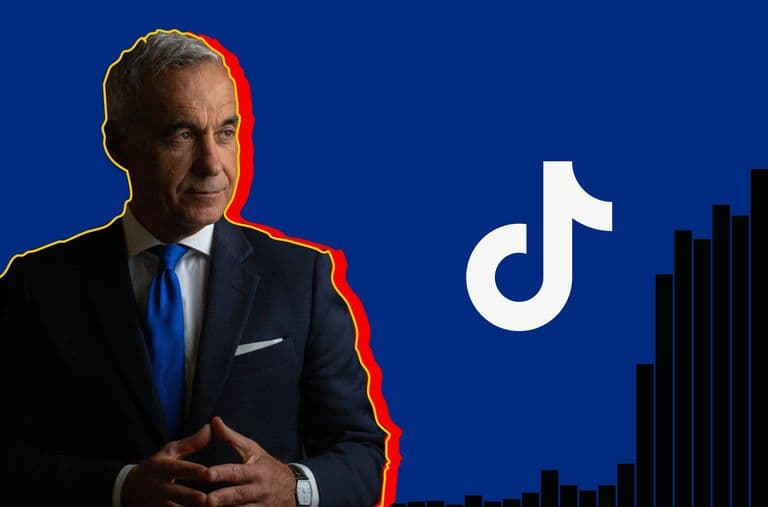
TikTok Abuse In Romania’s Cancelled Presidential Elections
On the abuse of TikTok’s algorithms and synthetic engagement systems during Romania’s now-cancelled presidential elections in 2024
Newsroom
Latest
- Enforcement
Commission fines AliExpress €550M: the largest DSA fine to date
The European Commission fined AliExpress €550 million for failing to diligently assess and mitigate the risk of illegal, unsafe and counterfeit products on its marketplace. It is the largest DSA fine so far, surpassing the €200M Temu decision. AliExpress must submit an action plan by 20 October 2026.
- Blog
Commission accepts X’s DSA action plan. The repository is still broken.
Brussels accepted X’s plan to fix its ad repository and open up researcher data access. X now has six months and an independent audit ahead. As of our 12 July test, none of it is fixed yet.
- Platforms
Two new platforms: Snapchat and LinkedIn
Two more platforms join the tracker. Snapchat: 94.8M EU monthly users, plus the Commission's open proceeding on protection of minors. LinkedIn: 55.2M logged-in EU users. Both with per-country data and DSA transparency reports.
- Blog
We tested X’s ad repository. It still breaks Article 39.
Seven months after its €120M DSA fine, X’s ad repository still is not searchable, still lacks the data Article 39 requires, and is now slower than when it was fined.